

Couples Therapy
For couples who are sick of fighting the same fight or feel so disconnected they are more like roommates than lovers.
Reconnect, rebuild, and expand with strategic sessions getting you from where you are to where you dream you can be.
Being in a relationship is hard! We trigger each other all the time and get stuck in a loop- in a cycle- that seems impossible to break.
Whether you’re facing chronic arguments, a major life transition, infidelity, or simply want to deepen intimacy, couples therapy provides tools to navigate challenges together and strengthen the relationship for the long term.
Sessions are structured in a way that teach both partners skills to practice and fun assignments to complete in between sessions to keep the learning going. Neuroplasticity is the secret ingredient to get the relationship that puts you in the top 20% of satisfied couples.
Where Couples Therapy meets Relationship Coaching

Are you feeling unsatisfied in your relationship?
Are you having the same fights over and over?
Do you feel like you’re about to call it quits?
Have you seen a couples counselor before and got nowhere?
Are you willing to give it one last try to fall in love again and have the relationship of your dreams?
I can get you there.
“In just 12 hours you can have a completely different relationship with the person you love.”
-Jourdan Blue
Founder of Relationship Theory Model

Did you know?
Only 20% of couples that stay together are happy and still in love after years of being together?
So what makes up the other 80% of couples?
Couples who are totally disconnected emotionally
Couples who fight often and/or poorly
Couples who are neutral- they feel more like roommates. They don’t have emotional intimacy and passion.
Couples who are pleasant and parent well together and from the outside, look great! But behind closed doors aren’t connected.
Couples who can’t stand each other but stay together for other reasons such as for the kids, financial issues, etc.
Those in the 20% have learned to be securely attached to one another, bringing many benefits to their lives including:
Better physical health and immune function
More career fulfillment and satisfaction
Higher self esteem and self worth
Increased ability to handle stressful events in life

What is Relationship Theory Model?
Relationship Theory Model was created by Jourdan Blue. She felt frustrated by all the different approaches to couple’s work and how they all seemed to be missing one (or more) important parts to help improve relationships. Jourdan, like myself, have a direct approach and most popular couple’s counseling modalities like Gottman and EFT do not. So she decided to make her own model by taking the best parts of many theories and combining those with the 70+ years of research on Attachment and the 20+ years of research on Neuroplasticity. The result = true lasting change that you can see and feel.
RTM sees the problem in relationships as Insecure Attachment. The vast majority of people have insecure attachment (be that anxious, avoidant or mixed). To be honest, the exact kind you are doesn’t really matter. It’s more about the cycle that you and your partner are stuck in.
RTM sees that the solution in relationships lies within Neuroplasticity. Our brains can change! It takes the right information, tools and practice. Meaning…we can LEARN how to be securely attached.
The simple solution equation is this:
The Right Information, Tools and Support
+
Two Growth Mindsets
=
Becoming a Securely Attached Couple and being in the 20% of truly satisfied partners
The Harvard Grant Study
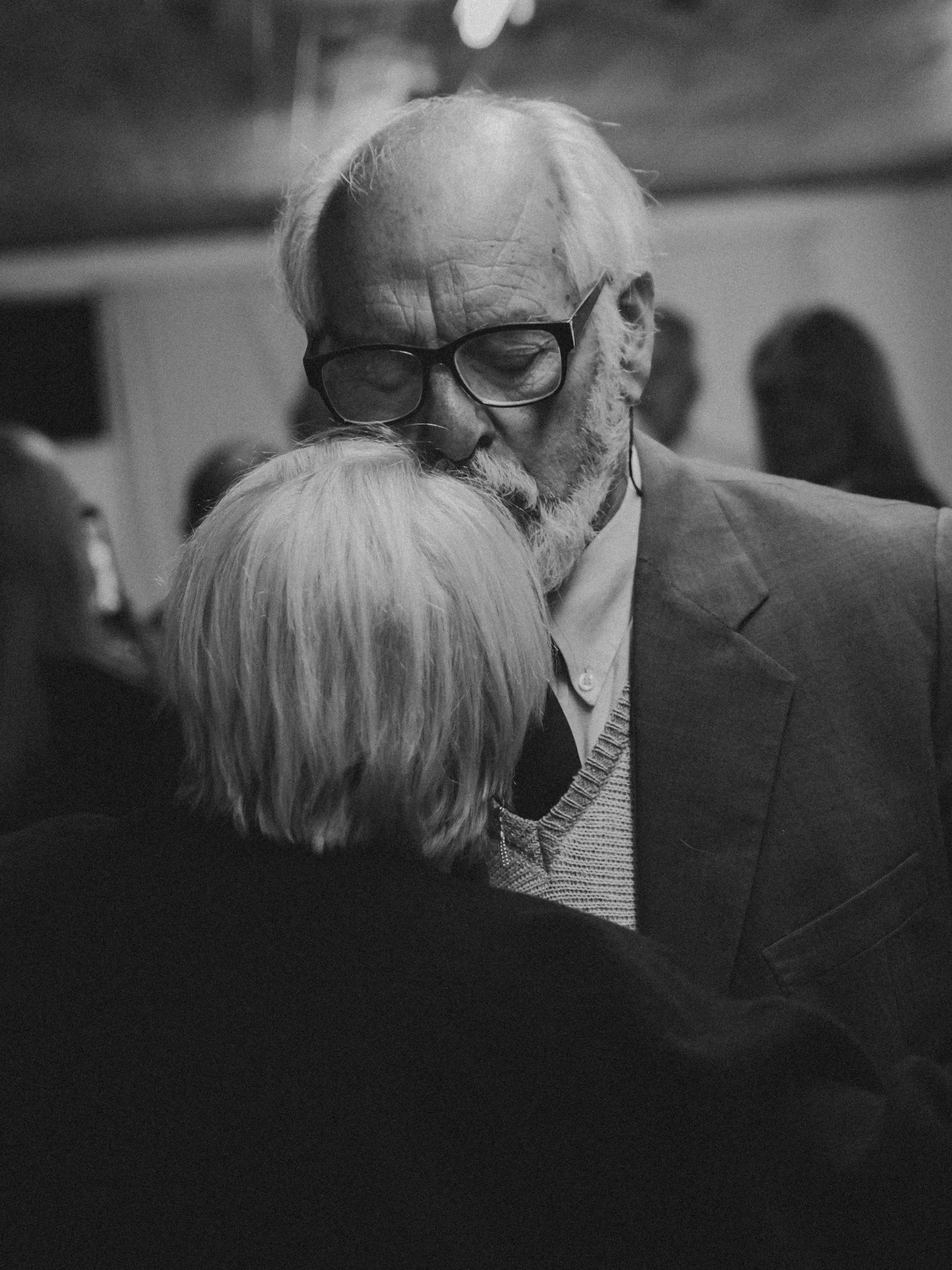
Started in 1938, this study is the longest running longitudinal study of human life ever conducted. It has tracked the physical and emotional health of men from both Harvard and the Bronx to see what the secret is to a happy and healthy life.
The study found that happiness wasn’t about success, status, IQ, money or the absence of stressors(!) that led to bliss. Instead it found that the number one predictor of happiness, bliss, long-term health and longevity was the quality of our relationship.
“For eighty-four years (and counting), the Harvard Study has tracked the same individuals, asking thousands of questions and taking hundreds of measurements to find out what really keeps people healthy and happy. Through all the years of studying these lives, one crucial factor stands out for the consistency and power of its ties to physical health, mental health, and longevity. Contrary to what many people might think, it’s not career achievement, or exercise, or a healthy diet. Don’t get us wrong; these things matter (a lot). But one thing continuously demonstrates its broad and enduring importance: Good relationships. In fact, good relationships are significant enough that if we had to take all eighty-four years of the Harvard Study and boil it down to a single principle for living, one life investment that is supported by similar findings across a wide variety of other studies, it would be this: Good relationships keep us healthier and happier. Period.”
-Robert Waldinger
Director of the Harvard Study

Are you in a “stalemate” with your partner?
Are you ready to get unstuck?
Signs you are in a stalemate and are stuck on an issue:
Staying stuck, feeling stuck
Lack of action
Topic you can’t talk about
It’s all or nothing
You are triggered and rigid
It’s an avoided topic
Feeling really misunderstood by your partner so you stop trying to explain yourself
Feeling that you lack understanding for your partner
Not assuming good intention of your partner
Stalemate issues might be with intimacy, parenting, fertility, big decisions like having children or moving, financial decisions and more.
If you are ready to find resolution, come up with a plan and move on together as a team, RTM is the perfect modality for this!
This is the Model for Men.
Why do most men shy away from counseling? Because they don’t want to get all mushy into their feelings! Culture has taught men that being emotional, vulnerable, and sensitive is a bad thing and a sign of weakness. So of course something like therapy is going to give them a bad taste.
RTM is different. It’s not passive. It’s not all about “how are you feeling right now?” It’s direct and it comes with tools, scripts, and information based in research. RTM also promises incredible results without having to be in therapy for years, talking in circles about emotions. I will challenge both of you to understand your attachment and how it’s creating problems in your relationship. You will get clear and concise information and direction in session so that you leave every session learning something new and feeling like you both have more control in your own relationship.

You may have insecure attachment if….
You worry about being a burden
You have a narrative that you are too much, not enough, a failure, not lovable, defective, broken, not special or important
You see other’s needs as more important than your own
You are uncomfortable with people relying on you or needing you
You tend to end up feeling lonely, rejected, and abandoned in relationships
You are dating the same type of person and noticing changes in the relationship around 6 months - 1.5 years
It’s hard to open up and be vulnerable with your partner
When people show you they care, you assume it’s out of obligation
You take criticism too personally and struggle to accept compliments
You are dismissive of your emotions or your partners (or both)
When you are upset, you either pull away from your partner or you get more clingy
You need a lot of reassurance in your relationship
You have issues trusting yourself and others

Why My Approach Works
A lot of common couple’s counseling modalities use a passive approach. Some focus on feelings and create the space for each person to share how they feel. Others focus on behavioral changes without getting to the root of WHY behaviors are or are not happening. My approach is different because it is directive and is done in a more coaching style with interventions that are based in science.
You will leave the first session feeling like you already made progress, already learned something new, and already have something to practice until the next session. This approach is all about proactive change by using a blend of teaching and education, practicing in session and having reps outside of session to help keep you and your partner connected to the process (i.e. using neuroplasticity to rewire your attachment).
I am direct with my clients and am very invested in helping them reach their goals. I am there 100% and I expect my clients to be as well. I know the power of being in a secure marriage and how it affects every single aspect of your life, and I want that for every one of my clients. If you are ready and willing to do the work and are ready to be with a therapist who will teach you, guide you and support you, then book a consult call with me to learn more about what the process looks like.
In-Person and Online Therapy Options
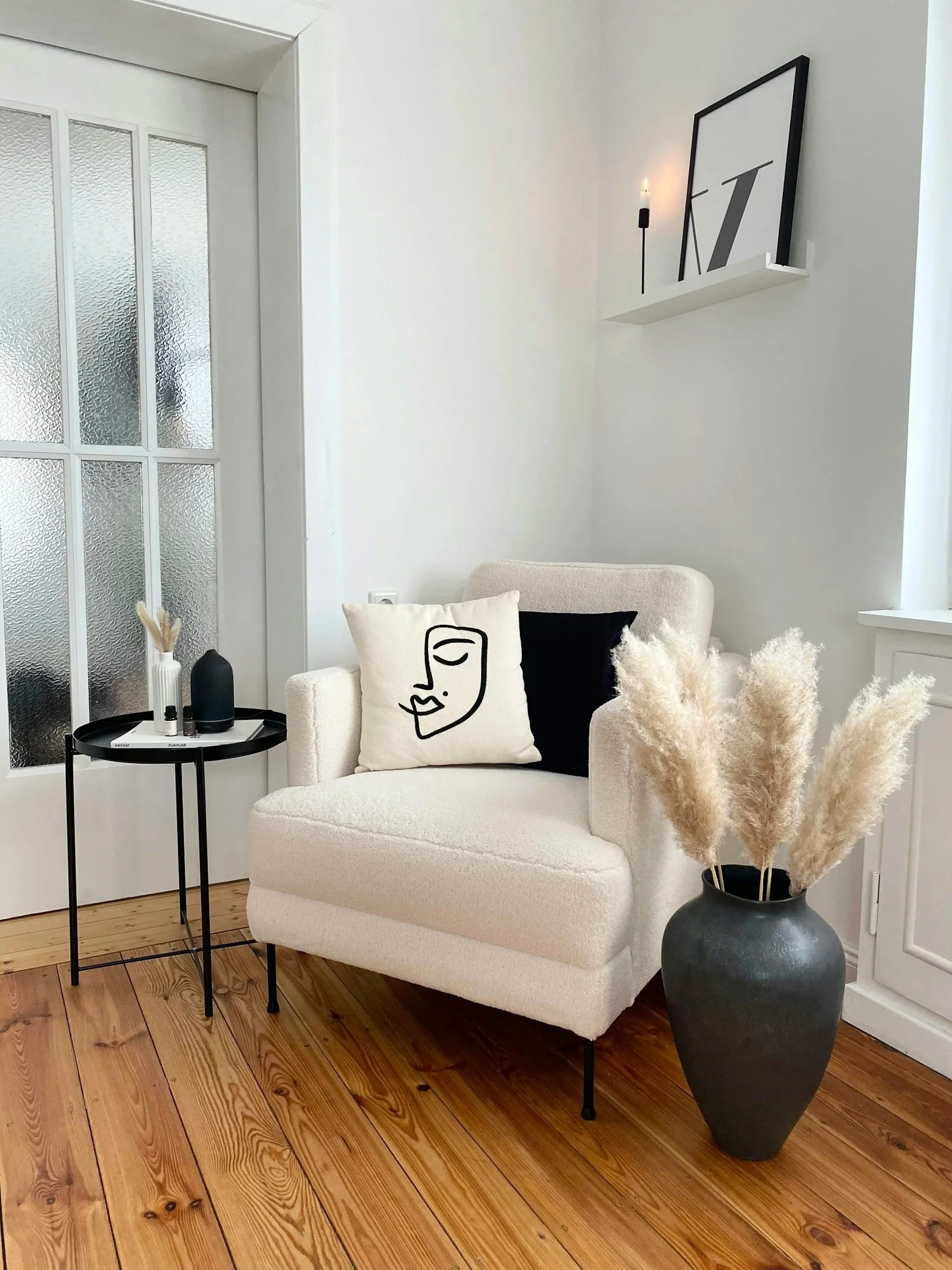
I offer both in person sessions in my Lynnwood office and Telehealth. I understand that it can be hard to step away from your commitments and journey to my office for your sessions, so I like to have both options available. However, being in person does create a more intimate and supportive atmosphere and it also helps with your neuroplasticity. We are taking you and your partner out of your regular places where disconnection and fights usually happen, and are putting you in a neutral place where your brain has no association with your cycles. By being in person, you are getting more bang for your buck.
Why I decided to work with couples: There had to be a better way
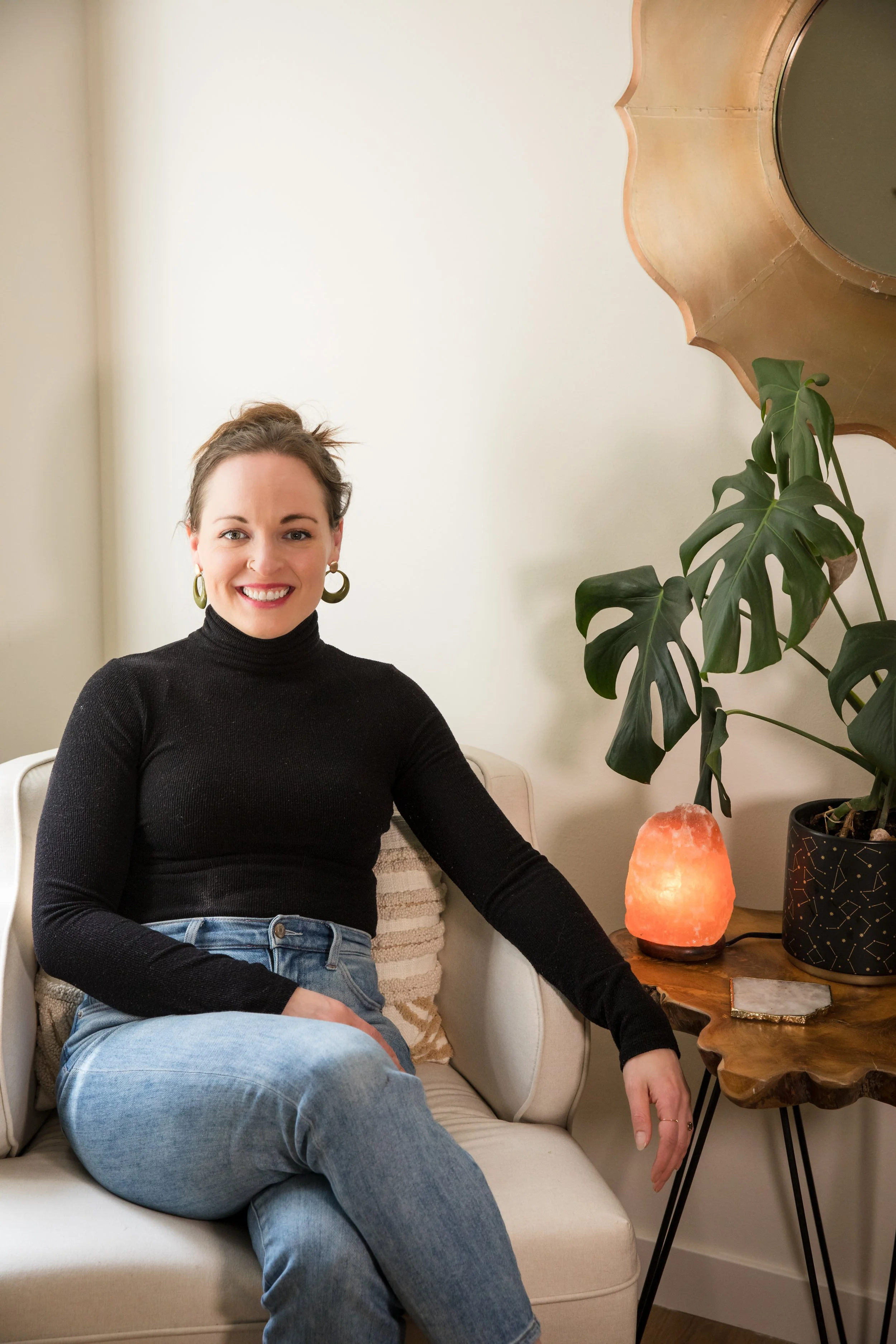
I didn’t go to school to work with couples. I chose the tract for individual counseling and have stayed in that lane for a decade. During this time, I saw a couple patterns in marriage counseling that were concerning to me. My clients who were in couple’s counseling were either 1) not getting better in their relationships or 2) they were getting worse. As a therapist, my primary goal is to help clients get better in whatever area is considered problematic. What I was seeing from these counselor’s was that they were using the same treatment for clients regardless of there being no improvement. It seemed like their counselors were fine with letting their clients remain clients for years with no change and that bothered me! The traditional passive approach wasn’t working for my clients, so I decided to get trained in the Relationship Theory Model that uses science, directness, education and neuroplasticity to create real and lasting change.
Why I decided to work with couples: My story
Believe it or not, we didn’t learn much about attachment in grad school, so I never gave it much thought. It seemed like everyone had issues in their relationships, so it didn’t seem odd to me that I did too. It wasn’t until my early 30’s that I had to stop and examine my patterns, my limiting beliefs, and the problems I was creating in my own life.
You see, I grew up in a wonderful home. My parents loved one another, we had everything we needed and a lot of what we wanted, and we were stable. My parents never struggled with substances, money, anger, abuse or neglect. As far as I was concerned, I had secure attachment based on my childhood. But as I began to work on myself, I came to realize that I was insecure and it showed up in all my relationships and within my own head, heart, and life.
I thought it was a miracle when I learned that I could heal my attachment! I put in the work, I asked the hard questions, I had to humble myself enough to see myself in an honest light. No one was coming to save me. And all of a sudden that realization didn’t seem paralyzing, it felt freeing! I had a say in the next chapter of my life! I had found the secret to change- a growth mindset.
Fast forward, I am securely attached and happily married to a wonderful man named Jason. We share the ups and the downs together. We cry and laugh together. We cheer each other on in our careers and goals. We give attention to issues as they arise and don’t push them under the rug. We are years in and I can genuinely say that he is my safe person and I can turn to him for literally anything. My entire life has changed because I did this work and I want everyone to be able to live this way too.
We are hard wired for secure attachment.
You get to be your most full, authentic, daring and compassionate self when you have it.
FREQUENTLY ASKED QUESTIONS
-
There are a lot of counseling models for couples ranging from Gottman (behavior focused) to EFT (emotionally focused) and PACT (in the moment focused). While they all have something to offer, they take a lot of time to see changes and have a much more passive style. The therapist is a guide and is learning as you do. In RTM, I am much more direct and use my role as more of a teacher and coach than a passive passenger. Every session will have ah-ha moments, new information, practice, modeling and reps. You will never leave a session feeling like you didn’t get anything out of it.
We are looking for deep change, not cheap change.
-
Because RTM uses neuroplasticity as it’s solution to the problem (attachment), the approach is different in sessions as well as in between.
Working with me will look like and include:
Longer sessions (ideally 2 hours)
Every session has an intentional outline so we never get lost
Access to the 20% Club see below for more info
Thoughtful and effective
reps to complete between sessions (movie nights, connecting questions, personal check ins with me, etc.)More access to me via texting, voice notes, etc.
-
The 20% Club is one of the coolest parts about RTM!
It’s an online club that has the Rewire Workshop (5 hours of content about attachment, neuroplasticity and more) that you watch BEFORE our first session. It covers the most important things to know before we begin our work together so you can be primed and ready to use the RTM model and NOT have to pay for more time in session to learn.
My favorite part though are the masterclasses. You and your partner will get access to two classes each month that have a range of topics that are important to learning secure attachment. I will assign them based on what is most important that week so you and your partner can continue to do the rewiring work between sessions.
You will learn SO MUCH from these masterclasses and the best part is you can watch or listen them over and over. again
-
This is another way that RTM is different than other approaches.
You will watch the Rewire Workshop together before our intake
Each session is 90 minutes to 120 (120 being preferred)
The first 6 sessions are already mapped out! There is an intentional process from session 1 to session 6 that will help you and your partner not only feel less disconnected, but to also feel more connected. We’re working towards more of the good, not just stopping the bad. After the 6 sessions, we will decide if you want to proceed to sessions 7-12 with a more customizable plan.
There will be “reps” in between sessions to keep you and your partner connected to the process and unlearning old patterns while immersing yourself in the new patterns
Before each session, there will be a short questionnaire for each of you to complete that will help set the stage for the best use of our time together
All in all, you will never feel lost, stuck or confused! I will always know where we are and where we are going.
-
As an RTM therapist, I am strategic, assertive, structured, direct, results focused, confident, convicted, empathetic, compassionate, curious, authentic, relatable, accountable, committed and knowledgable.
I will share both my own personal stories and experiences as well as educate you on how to create a secure attachment and deepen connection.
I will point out blindspots, sabotage behaviors, cycles, and limiting beliefs. I am listening to every word and engaged in every moment to give you and your partner the absolute best experience possible. You will always leave with at least one win.
My job is to give you the information, support and tools and your job is to have a growth mindset. That’s the winning combo!
You are the expert on our story and I am the expert on the pathway to change using Attachment and Neuroplasticity research.
-
This is what 20% of thriving couples have with one another- and my goal is to get you there! This is what it looks like:
Dependency is safe and good
You feel enough (good enough, lovable, worthy, etc) and you look for proof of those beliefs
If someone treats us differently/poorly, you assume it’s about them and not you
Vulnerability is connection and is exciting
-
We seek out, monitor and try to maintain emotional and physical connection with our loved ones. We rely on them to be emotionally accessible, responsive, and engaged with us
We reach out for loved ones particularly when we are uncertain, threatened, anxious or upset. Contact with them gives us a sense of having a safe haven, where we find comfort and emotional support; this sense of safety teaches us how to regulate our own emotions and how to connect with and trust others
We miss our loved ones and become extremely upset when they are physically and emotionally remote; this separation anxiety can become intense and incapacitating. Isolation is inherently traumatizing for human beings.
We depend on our loved ones to support us emotionally and be a secure base as we venture into the world and learn and explore. The more we sense that we are effectively connected, the more autonomous and separate we can be.
-
Having social connections is better for our health and well being and conversely, loneliness kills.
Having higher quality close connections is more important for our well-being than the number of connections.
Having good relationships is not only good for our bodies but also for our brains.
-
Secure relationships are directly linked to better physical health, emotional well-being and longevity. Conversely, the research in loneliness has shown that:
It is as dangerous as smoking 15 cigarettes a day and as dangerous to the body as alcoholism.
Loneliness increases premature death by 26% and can shorten one’s lifespan up to 8 years.
The amount of isolation a person experiences (i.e. their subjective perception) is directly linked with a decline in brain function and physical health.
Both those living alone and those that felt alone in their marriages experienced more emotional and physical pain than those in connected relationships.
-
Our confidence
Our self esteem (how worthy or competent we believes ourselves to be)
How much we do or don’t sabotage
Overall success
Overall joy and happiness
Who we pick as partners
How we communicate
What we do when feeling vulnerable
How safe we feel in the world and depending on others
Our honest beliefs about ourselves
Anxiety and depression
Shame
Judgment towards others/self
Parenting quality


Located in Lynnwood, WA, Ebb and Flow Counseling is a dual-focus practice combining mental health therapy and nutrition counseling. Specializing in trauma, anxiety, and eating disorders, provider Brooke Brandeberry employs a variety of modalities including Brainspotting, ART, and Reiki. The practice caters to those seeking deep, structural change, offering unique services such as "Therapy Intensives" for rapid recovery, specialized support for therapists, and group therapy, all available in-person or via telehealth.